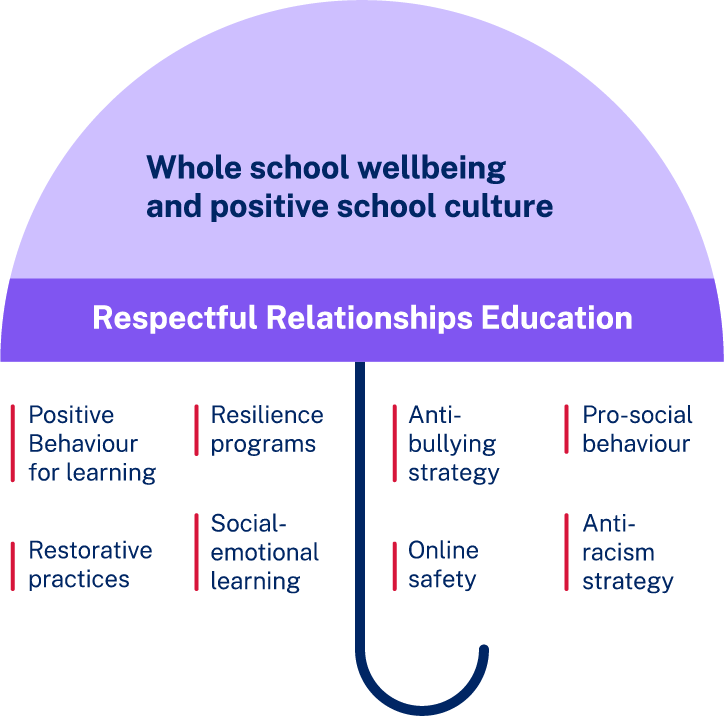
Promoting Respectful Relationships Education in schools
Respectful Relationships Education (RRE) in schools should focus on the whole school community.
Schools are workplaces as well as places of learning. Besides students and the achievement of learning outcomes, it should focus on:
- staff
- organisational cultures
- structures.
Combined wellbeing, respectful relationships, and behaviour programs create positive environments in NSW schools.
Wellbeing, Respectful Relationships, and behaviour programs
Wellbeing programs in schools help students develop resilience, emotional regulation, and social skills. This creates a foundation for positive interactions and personal growth.
Behaviour programs:
- establish clear expectations for students
- promote positive conduct
- are essential to support a positive learning environment
- often align with wellbeing and respectful relationships initiatives.
Respectful Relationships Education promotes a culture of respect, empathy, and understanding among students. Programs that promote respectful relationships teach students to:
- communicate effectively
- resolve conflicts peacefully
- appreciate diversity and equality.
These skills are essential for creating a safe and supportive learning environment. Research shows a coordinated approach to strengthening respectful school culture has powerful results.
Access more information about the role of:
- Leadership and commitment
- School culture and environment
- Teaching and learning
- Supporting the school community
Existing programs
Existing wellbeing and behaviour programs that contribute to RRE in schools include:
- Anti-bullying programs
- Social-emotional learning
- Anti-racism programs
- Resilience programs
- Pro-social behaviour
- Restorative practices
- Online safety
- Positive Behaviour for learning