
NSW Government Infrastructure Traineeship Program
The NSW Government Infrastructure Traineeship Program was designed during the COVID 19 pandemic for Year 12 students to develop their professional skills for working in the infrastructure industry - making a difference to communities across NSW.
It was a unique and innovative model to strengthen the State’s construction industry through a professional and academic pathway for Year 12 school leavers. It's success has led to other trainee and cadet programs.
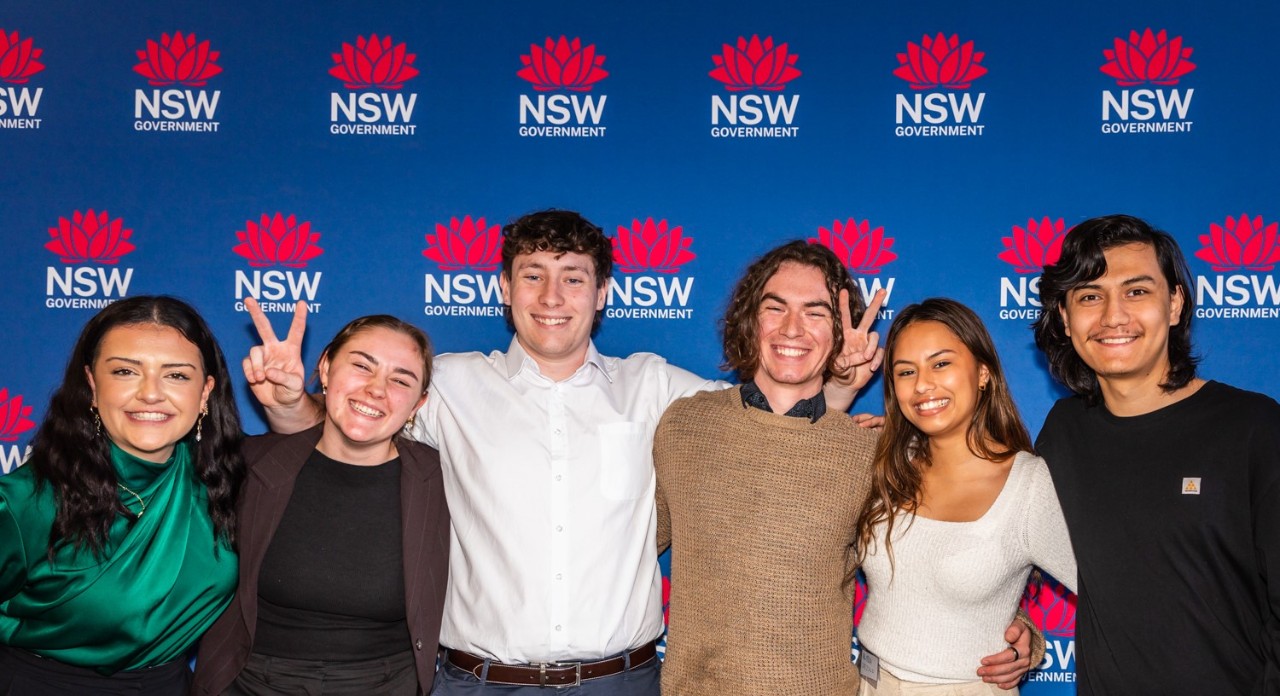
A diverse workforce
The program has been committed to supporting the infrastructure sector but also ensuring meaningful pathway opportunities for young people especially those that traditionally don’t enter this sector: women, Aboriginal and Torres Strait Islander people, people with disability, and people in regional and rural areas.
As a state-wide program, the program has offered work placements in rural, regional and metropolitan areas.
Investment in the State’s growth
Since starting in 2021, almost 500 young people have had the opportunity explore a career in infrastructure through this government-developed program, with two aims:
- creating a pipeline of new, young workers into the state’s infrastructure sector; and
- offering a post-school employment pathway supporting diversity.
Government funders and hosts
While in the program, undertook three work placements of eight months each with:
- government funder/host
- construction company host
- consultancy host.
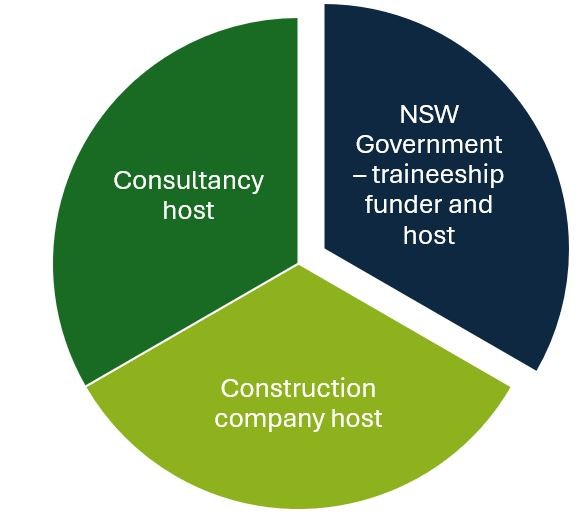
Government departments funded individual trainees for the full two years of their traineeship irrespective of where in their work placement-cycle they may be. This meant, trainees remained a part of their funding team ‘family’ and continue to engage with their department supervisor.
The NSW Construction Leadership Group (CLG) coordinates the delivery of the NSW Government’s 10 Point Commitment to the construction sector, The CLG, chaired by Infrastructure NSW, endorsed the NSWITP and funded development opportunities, research, and program promotion among government and industry sectors. Infrastructure NSWs purpose is to create a sustainable infrastructure legacy for the people of NSW, and knows a skilled workforce is essential to achieving this. The NSWITP was part of this goal, creating trainees who have experience in project management and business and procurement along with the opportunity to experience the workplace.
What trainees have said
I applied for the Infrastructure Traineeship Program because I had no strong thoughts of what job I might like in the future. I looked around for a while and then found the program which seemed like an opportunity I couldn’t miss out on. I am studying project management because it’s where I could see myself in a few years time. The traineeship has been monumental, amazing and worthwhile. The most enjoyable experience is working with the different teams. The other trainees, my supervisor and the buddies have made the entire experience enjoyable and helped me every step of the way. My advice for school leavers considering applying is to just go for it. It’s a great opportunity that you wouldn’t want to miss.
Calvin Drury - 2021 trainee
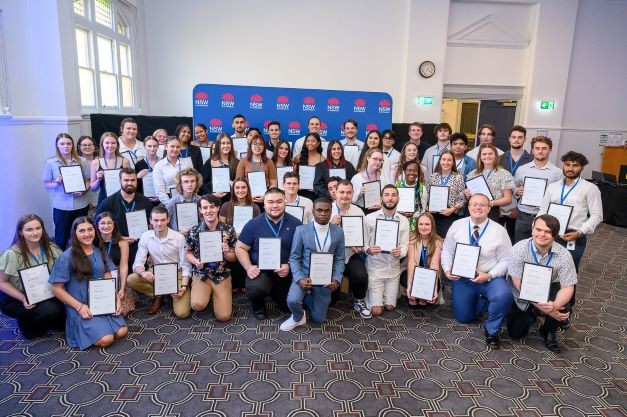


NSWITP Graduates across the years
During the two-year program each graduating trainees had undertaken a placement with their government funder, a construction company and a consultancy. They had also attained a Certificate IV qualification, with Project Management Practice the most popular of the courses (Table 1).
| Table 1: Qualification | Enrolments |
|---|---|
| Certificate IV in Business | 49 |
| Certificate IV in Procurement and Contracting | 60 |
| Certificate IV in Project Management Practice | 337 |
| Certificate IV in Surveying | 1 |
The program’s four intakes saw just under 450 Year 12 school leavers provided with an opportunity to explore a career in infrastructure (Table 2).
| Table 2: Intake year | Number of trainees |
|---|---|
| 2021 | 138 |
| 2022 | 117 |
| 2023 | 136 |
| 2024 | 53 |
Close to 75% of each intake had a successful outcome thanks to their participation in the program:
- The first intake of 138 trainees in 2021 graduated from the program in February 2023, with 69 celebrating their full completion of the two-year program A further 23 left the program early to take up full-time working the sector and 5 left to undertake full-time tertiary study.
- 117 trainees in the 2022 intake of which 67 completed the full program and a further 24 left to start early employment in the sector (11) or undertake full-time tertiary study (13).
- 134 trainees in the 2023 intake of which 75 completed the full program, a further 19 finished early to accept and employment offer and 7 to begin full-time tertiary study; and
- 53 trainees in the 2024,. This cohort is the final intake and completes their traineeship with their graduation in February 2026.
Celebrating with friends, families and VIPs
Attending each graduation were the friends and families of the graduates and representatives from the NSW Government agencies funding the program, and infrastructure businesses providing industry placements.
There were also many special guests representing the NSW Government and government agencies that had funded the traineeship.
These guests, over the years, included:
- Uncle Allen Madden and Michael West, Metropolitan Local Aboriginal Land Council
- Greg Warren MP, Member for Campbelltown, Parliamentary Secretary to the Deputy Premier, Parliamentary Secretary for Education, Early Learning and Western Sydney. Mr Warren attended on behalf of the Deputy Premier, and Minister for Education and Early learning, Prue Car.
- Murat Dizdar, Secretary, NSW Department of Education and former Secretary Georgina Harrisson
- Josh Murray, Secretary, Transport for NSW
- Tom Gellibrand, Chief Executive, Infrastructure NSW
- Stephen Brady, Managing Director, TAFE NSW
- Kylie De Courteney, Managing Director, NSW Telco Authority
- Lyn Rickard, Executive Director TAFE Digital
- Joanne Nolan, Training and Development Consultant, CPB Contractors
- Mel Gholami, Founder and CEO Planix Projects
- Said Hirsch, Head of Strategy, Planning and Innovation, Infrastructure NSW
- Peter Arambatzi, Chief Operating Officer, TAFE NSW
- Lisa Harrington, acting Deputy Secretary, School Infrastructure, NSW Department of Education
- Jeremy Kurucz, acting Deputy Secretary, Education and Skills Reform with the NSW Department of Education
Yet despite the distinguished guest lists, the spotlight always belonged to the trainees. Many played formal roles in the ceremonies— Amanda Bruhn, James Cavallaro, Samuil Angelkoski, Isabel Purser, Benjamin Boon, Chloe Krstevski, and Georgia Burton each delivered speeches on behalf of their graduating class, while Jack Logan and Nathan Abrahams co-hosted on separate occasions as Master of Ceremonies Masters of Ceremonies.
Last modified date
02/10/2025
Business unit contact email
Executive director
Alexandra Wilson
Executive director’s business unit
School Infrastructure NSW