Calendar for cultural diversity
The 2026 Calendar for Cultural Divesity, with the theme Towards Peace, is now available to download. Recommended for printing in A3.
Download the 2026 Calendar for Cultural Diversity PDF 57.3 MB
Download the 2026 School Planner for Cultural Diversity PDF 9.2 MB
The calendar for cultural diversity provides annual dates and information for commemorations, celebrations, national days, international days, religious observances and other key events of relevance to NSW public school staff, students and their families.
Through acknowledgment and celebration of these days and events, NSW public schools can lead the way to social harmony by engendering positive interactions between students, staff and community members from the range of cultural, linguistic and religious traditions of Australians.
Each year, the calendar promotes a different theme relating to cultural diversity in the Australian context.
- Explore as a class what the theme for the calendar for cultural diversity calendar for 2026 "Towards Peacer" means.
- Discuss what this theme means to the students considering their different school, personal and community contexts.
- Explore the languages featured in each month including related literature.
- Investigate significant events, features and relationships within the students’ personal, school, local or global community.
- Reflect on the ways that artists make artworks that are then interpreted and valued differently by audiences.
- View artworks that have been made for different reasons and consider the who, where, when, why and how of these works.
- Identify possible symbols and techniques artists use in making their artworks to convey their message, meaning or subject matter.
- Investigate traditions, forms, materials and techniques in artworks that are suitable for portraying this subject matter.
- Consider the various ways in which the students, as artists, could present their work visually for possible inclusion in the calendar for cultural diversity.
Languages
A different language is featured on each month of the calendar, to reflect the linguistic diversity of NSW public school students who speak more than 240 different languages. Each year twelve languages are chosen to reflect the cultural and linguistic diversity of NSW. Each July, the calendar features an Aboriginal language.
In 2026 the calendar features the following languages:
- Armenian (Հայերէն)
- Maltese (Malti)
- Oromo (Afaan Oromo)
- Nauruan (Dorerin Naoero)
- Welsh
- Solomon Islands Pijin (Solomon Aelan Pijin)
- Wiradjuri
- Gujarātī ( ગુજરાતી )
- Slovak (slovenčina)
- Vietnamese (tiếng việt)
- Malayalam (മലയാളം)
- Karenni
July’s language is Wiradjuri, one of approximately 35 Pama-Nyungan languages once spoken in the area now known as New South Wales. During the 1800s, Aboriginal peoples across the state bore the brunt of European invasion and their languages were an early casualty with active suppression and the emergence of English as the common language between the different language groups.
The Wiradjuri are one of the largest Aboriginal groups in Australia, both in population and area of country. Their land covers a vast area across the central west slopes and plains of NSW, from Nyngan to Albury, and Bathurst to Hay. The Wiradjuri lived along three rivers, the Murrumbidgee, the Gulari (Lachlan River) and the Womboy (Macquarie River) and their country was known as the land of three rivers. Their language is the most commonly spoken Aboriginal language in NSW.
The 2021 census reported 1479 native speakers of Wiradjuri primarily in NSW. Ngurumbi is one of six seasons observed by the Wiradjuri, the cold season, when the people pulled their possum skin cloaks close around them, showing the patterns etched into the hide with hot sticks. This was the time of cold rains and snow on the mountains. The rivers were low in water but they were rising. The west wind came. It was the hardest time to obtain food, so the time to dig out animals hibernating underground.
People moved camp away from the cold and frost of the river. The Southern Cross was high in the sky. Based on its position, the people knew what season it was and when it was the time to collect emu eggs. The Wiradjuri people did not name the days of the week, but worked in cycles of the sun, the moon and the stars.
Aboriginal Language and Culture Nests aim to revitalise, reclaim, and maintain traditional Aboriginal languages and cultural knowledge in NSW schools. The North West Wiradjuri Language and Culture Nest has established strong links in communities in Dubbo, Narromine, Peak Hill, Trangie, Gilgandra, Wellington and Mudgee and government schools located within these communities.
Over 2000 students from the area are involved in Wiradjuri language and culture programs.
For more information about Wiradjuri language resources teachers may visit:
Wiradjuri Workbooks: Volume 1 Ngumbaay, Volume 2 Bula. Diane Riley-McNaboe, Lynette Riley
Wiradjuri dictionary WCC language program
Land of the Wiradjuri Paul Greenwood
Traditional Wiradjuri Culture Elizabeth Shenstone & Paul Greenwood
Artwork
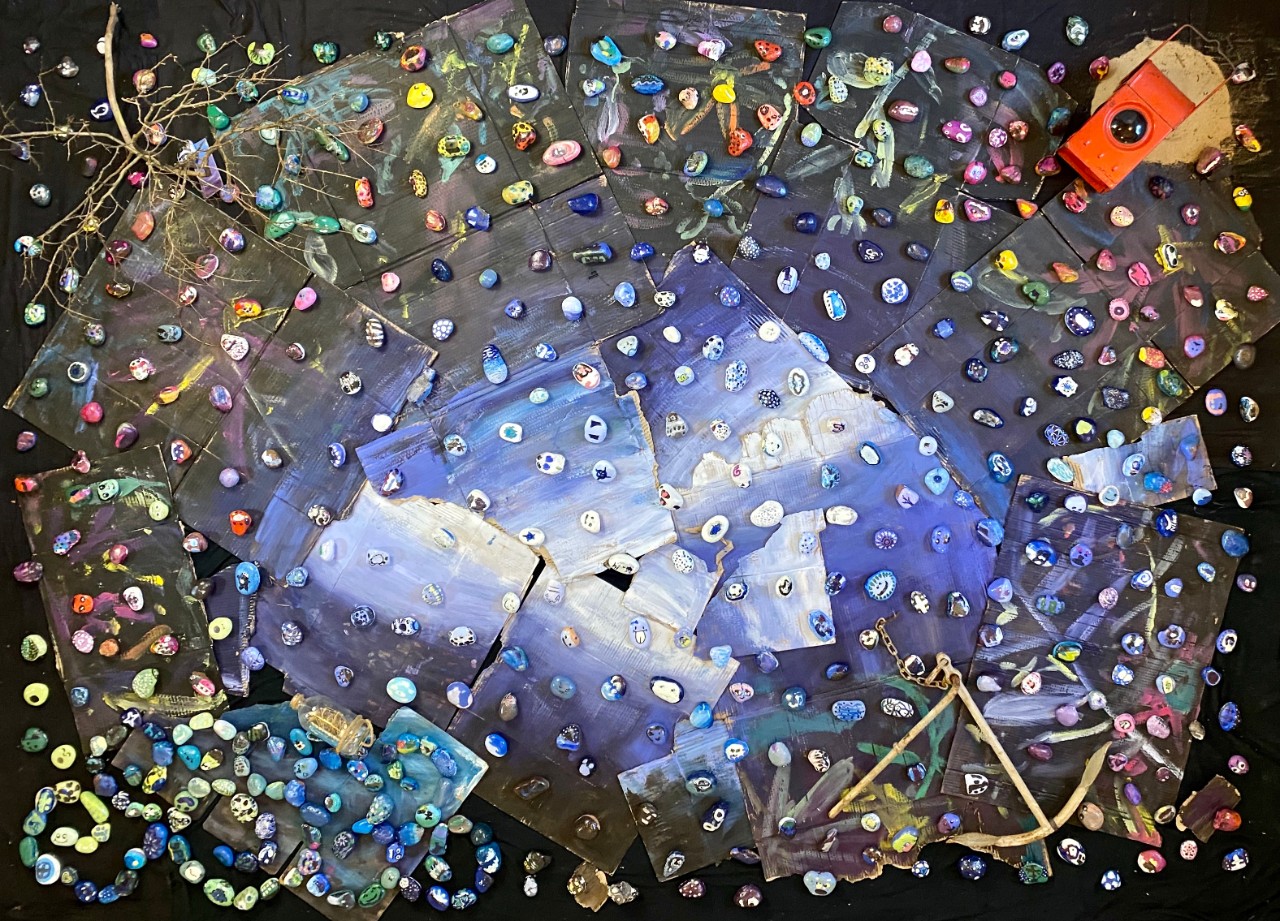
Each year, NSW public schools are invited to submit student artwork for possible inclusion in the calendar for cultural diversity around a given theme. The artwork selected for inclusion in each calendar represents the creative talents of public school students from across the state.
The theme of the 2026 calendar for cultural diversity is "Towards peace"
The calendar for cultural diversity includes an inset on the relevant lunar year, and its Australian zodiac equivalent, on the inside cover. 2026 is the Lunar Year of the Horse / Kookaburra. Schools are invited to submit artwork on the calendar theme or the lunar year theme.
Submissions for student artwork for the 2027 Calendar for Cultural Diversity will open in Term 2 2026
Schools may submit up to 4 entries.
Photographs should be submitted although the original artwork will need to be available for shortlisted schools.
File name of artwork should include name of school and title of artwork.
The following information should be gathered before submitting each artwork:
- name of artist/s
- year/s
- title of artwork
- name of school
- traditional country on which school is located
- name and email of teacher contact
- description relating to the work on the relevant annual theme (approximately 25 – 50 words)
- completed authority to publish form. For whole class or whole school artworks, a member of the school executive can complete the form on behalf of the school.
Artwork should:
- reflect the theme
- link to curriculum area
- be the work of a single student or a group of students.
Possible techniques, forms and styles may include (and are not limited to):
- drawing, cartooning or sketching – using pencils, inks, felt pens, charcoal, pastels or crayons
- photography and digital media – using apps, computer software, digital or other cameras for photography
- mixed media – collage, photo montage
- 3D – sculpture, textiles, fibre, installations using found or other objects and materials
- painting – watercolour, oil, acrylic or gouache paints, sgraffito
- printmaking – etching, monoprinting, linocuts, collagraph, or bas relief.
Students should consider their use of artmaking practices and qualities such as:
- line, shape and form
- proportion, space and perspective
- colour – light and dark and shading
- texture
- repetition and patterns
- points of interest and emphasis
- signs and symbols and so on.
For more information, or to request a calendar file for professional printing, please contact culturaldiversitycalendar@det.nsw.edu.au
Digital backgrounds
Explore and download our new digital backgrounds which can be used as desktop wallpapers and/or backgrounds in virtual meetings.

2026 downloads
- January digital background (JPG 510 KB)
- February digital background (JPG 315 KB)
- March digital background (JPG 455 KB)
- April digital background (JPG 423 KB)
- May digital background (JPG 472 KB)
- June digital background (JPG 473 KB)
- July digital background (JPG 502 KB)
- August digital background (JPG 464 KB)
- September digital background (JPG 417 KB)
- October digital background (JPG 502 KB)
- November digital background (JPG 484 KB)
- December digital background (JPG 429 KB)
- Calendar for Cultural Diversity 2026 (PDF 60124 KB)
- School Planner for Cultural Diversity 2026 (PDF 9665 KB)
- Welcome poster (PDF 729 KB)
Resources
The following resources provide teaching and learning activities to promote intercultural understanding: